

TEAM
ROLE
PHASE
STATUS
3 UX Designers, 1 PM, 1 Data Analyst, 1 Stakeholder
UX Lead, Research & Strategy
Pre-launch
Research complete. Development paused.
Genhouse Project
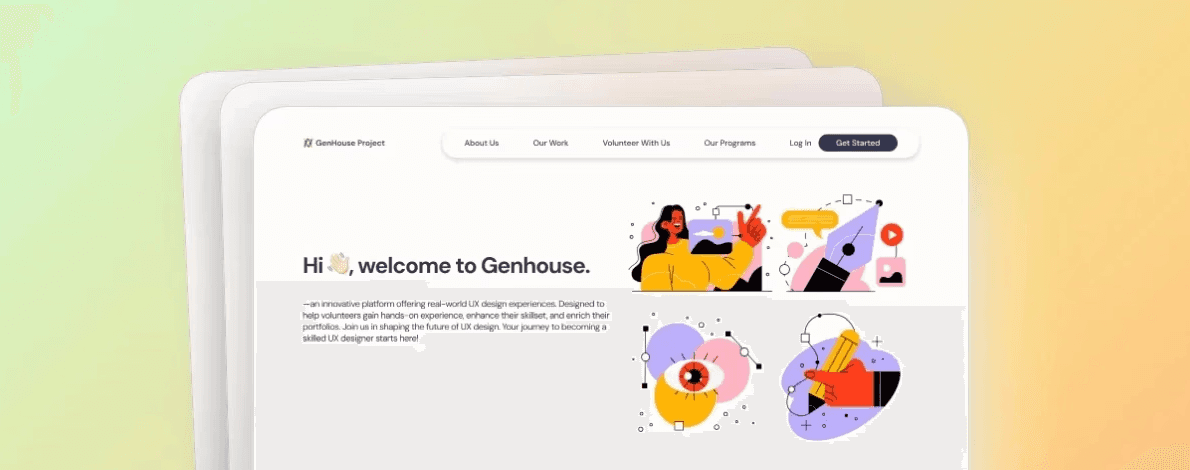
Research that changed the product before it was built. A foundation assumption was wrong and research caught it. The engineering budget was saved before anyone wrote a line of code.
case study
real-world SaaS
research + strategy
pre-launch
THE OUTCOME
30
5
1
$0
30 surveys and 5 interviews. One finding that changed everything: designers weren't struggling to find projects. They were struggling to find ones that actually counted. Access was not the problem, legitimacy was. That single insight repositioned the platform entirely, before any engineering investment was made.
survey responses
user interviews
full product pivot
wasted dev spend
Genhouse's founding assumption: early-career designers lacked access to real projects. The proposed fix was a subscription hub surfacing NGO opportunities. Reasonable hypothesis but a wrong one.
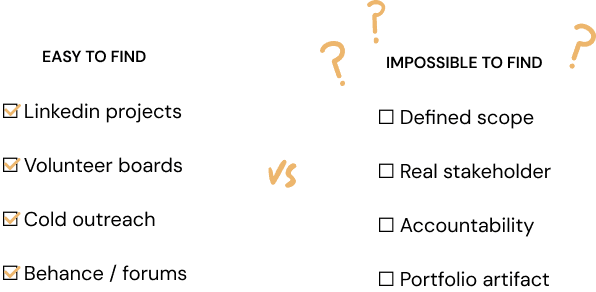
Designers were already finding projects through Linkedin, Behance, volunteer boards, cold outreach. What they couldn't reliably find were engagements with a defined scope, real stakeholder accountability, and something defensible in an interview room.
Access was not the barrier. Legitimacy was.
01 THE PROBLEM
Pre-launch products attract a specific kind of pressure: ship fast, prove revenue, don't overcomplicate it. That pressure was real. So was the data saying the faster path would fail. Holding a data-backed position while project infrastructure was actively unstable, the team was distributed, and timelines were slipping is its own skill set.
Yes, it was a lot.
Here's what that actually looked like.
05 NAVIGATING CONSTRAINTS
"I want to feel like my work is actually being used, not just sitting in a folder."
Interview participant. Variations of this appeared in nearly ever session.
That quote didn't shift the direction because it was emotional. It shifted it because it was consistent. The product wasn't missing a discovery feature, it was missing a credibility layer entirely.
02 RESEARCH FINDINGS
Four patterns strong enough to act on.
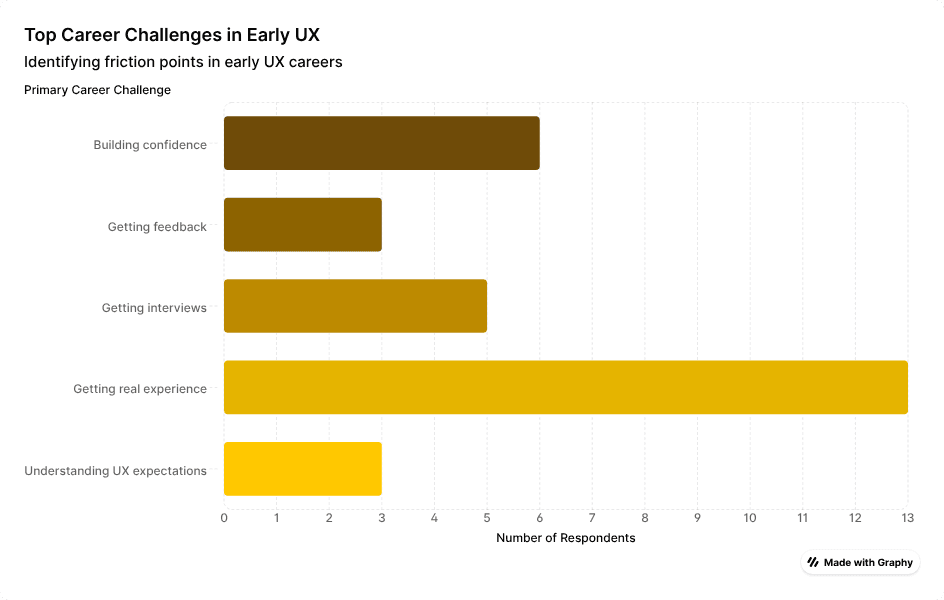
"Getting real experience" ranked as the top career challenge, at nearly double the next closest barrier. Designers knew where to look. They didn't know how to make that work count.
Experience over access
Signal: 13 respondents flagged this as their #1 challenge. The gap to second place was wide enough to reorient the entire product around it.
FINDING 01
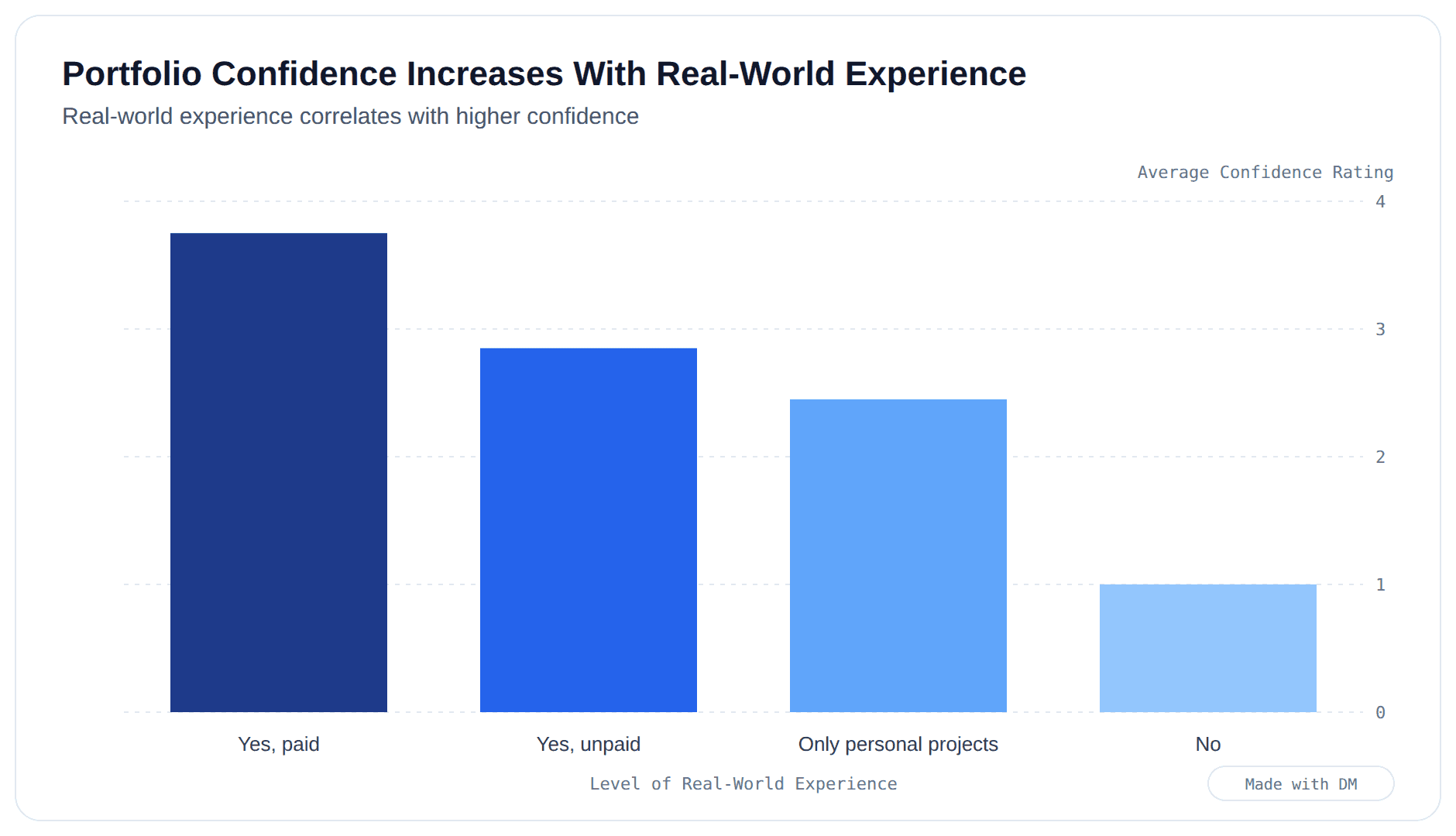
Portfolio confidence followed a clear staircase: paid client work at the top, personal projects near the bottom. The drop was steep, not gradual. Even unpaid client work produced measurably higher confidence than self-directed projects.
Confidence is earned through accountability, not effort
Signal: Confidence doesn't come from effort. It comes from stakes. Structured, accountable experience is the gap worth filling.
FINDING 02
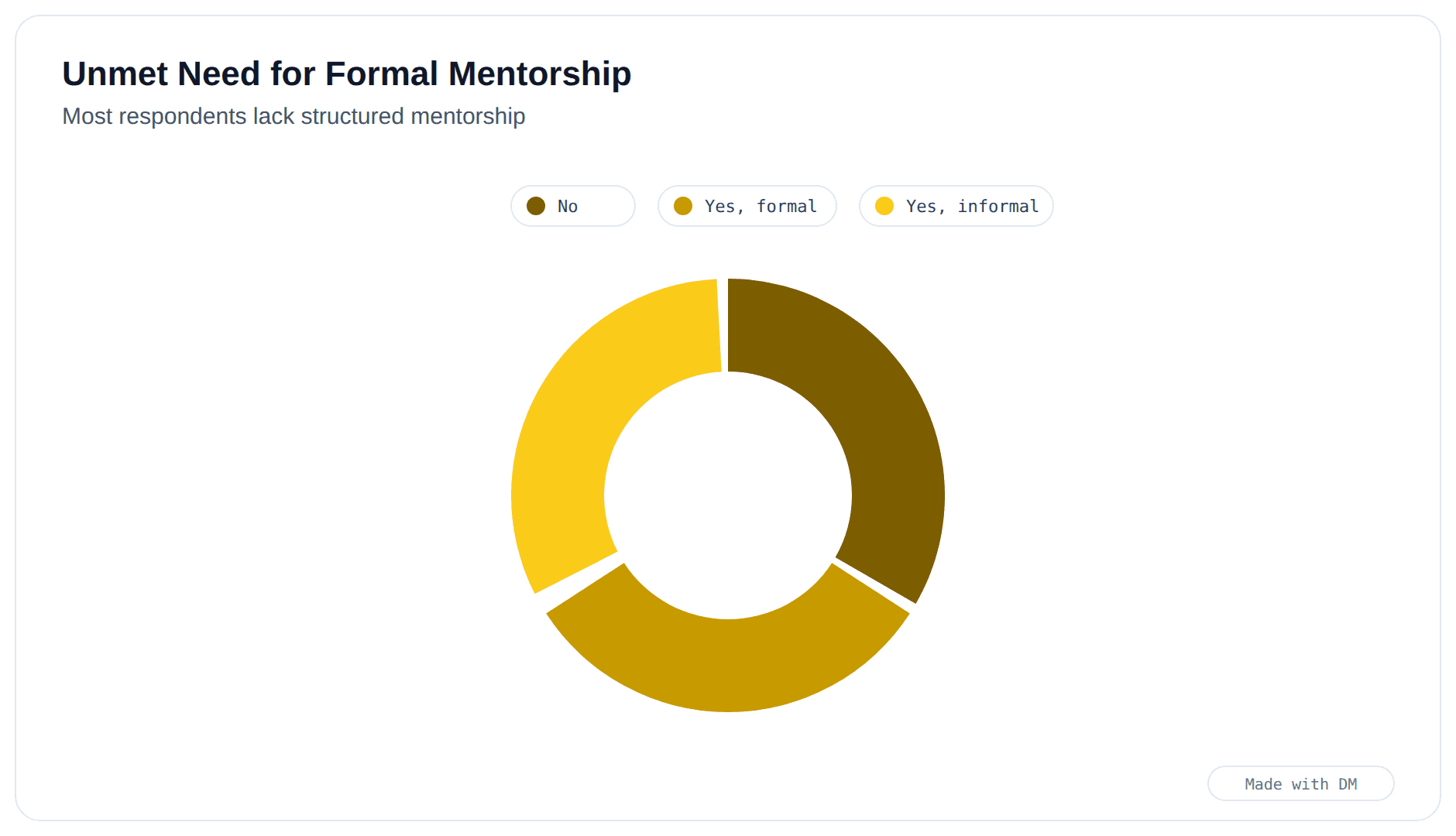
Most respondents had informal or no mentorship at all. That absence explained the anxiety around legitimacy. Designers were navigating career growth without guidance, and they knew it.
Mentorship is wanted but almost entirely absent
Signal: This wasn't a nice-to-have gap. It was foundational, and it pointed directly to what the platform should be built around.
FINDING 03
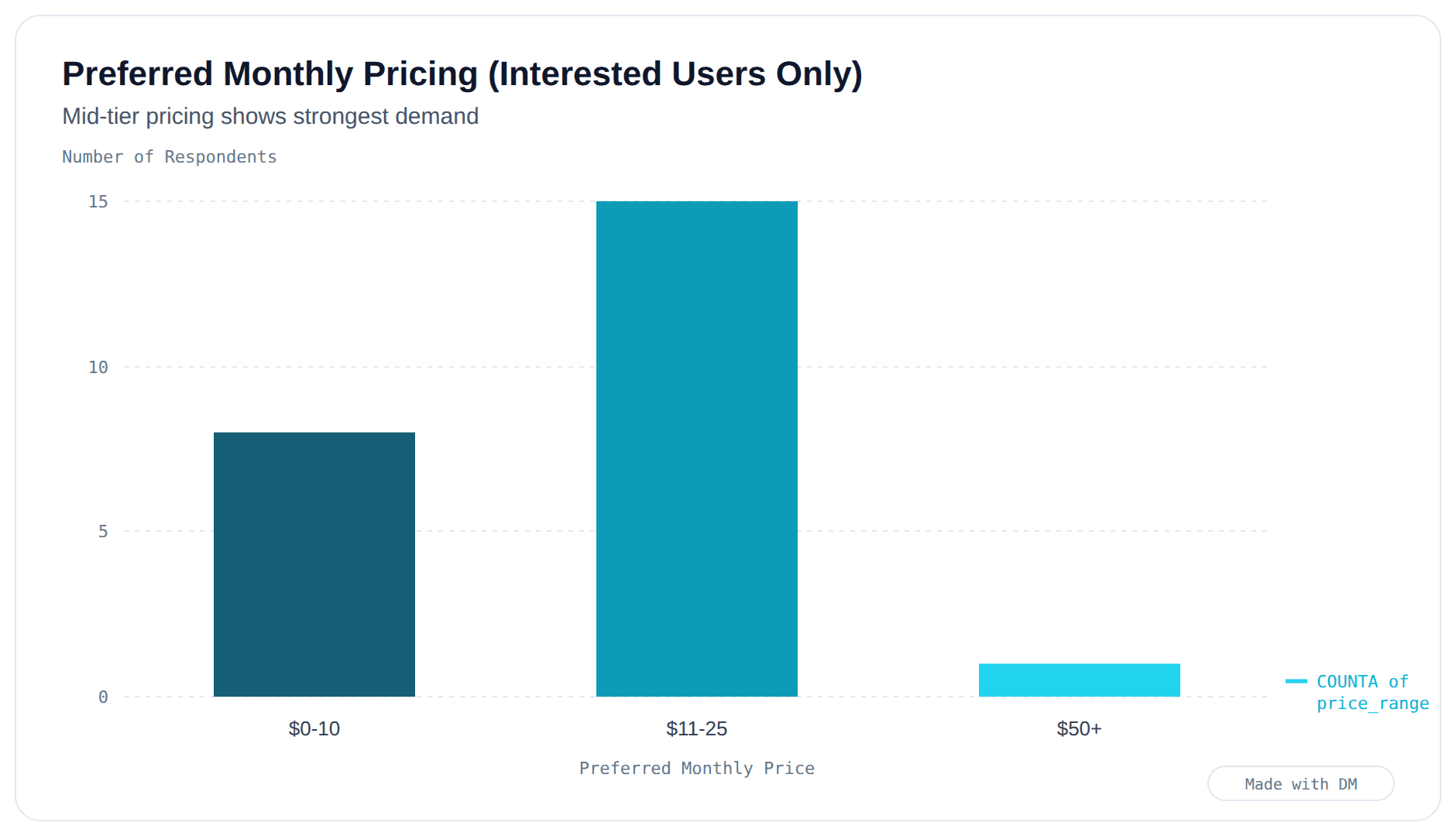
Roughly 80% of respondents were open to subscribing. But the pricing data added a critical nuance: demand cluster at $11-25/month and nearly disappeared above $50. Price resistance was a trust problem, not a budget problem.
Willingness to pay is conditional, not absent
Signal: The challenge shifted from "convince people to pay" to "build something worth what they already said they would pay."
FINDING 04
This was not a clean research-to-handoff arc. It was pushing back on stakeholders with evidence while the backend was uncertain and everything was on fire a little bit. The recommendation didn't change. How I delivered it did.
✧ Launch the listing hub. Get subscribers fast.
✧ Treat mentorship as a phase 2 feature.
✧ Validate monetization first, structure later.
WHAT STAKEHOLDERS WANTED
WHAT THE DATA SAID
✦ The listing hub won't convert. Legitimacy is the product.
✦ Mentorship is why 80% would pay at all.
✦ Without structure, there's nothing worth pricing.

• #1 barrier: getting real experience
• 80% open to subscribing
• $11-25/mo sweet spot
• $50+ near-zero traction
03 MY ROLE
From hypothesis to product direction.
04 THE STRATEGIC SHIFT
A fundamental change in what the platform was selling.

RESEARCH
Plan + Survey
SYNTHESIS
Sheets + SQL
STAKEHOLDER
In Alignment
INTERVIEWS
5 remote users
PRODUCT
Reqs + Pivot
Research plan, success metrics, 30-response survey, and 5 remote user interviews, all mine.
Designed the study end-to-end
RESEARCH
01
Pivot table dashboard, then CSV exported for SQL validation by the data analyst. Strategy shouldn't rest on spreadsheets alone.
Made the data defensible
SYNTHESIS
02
Findings became product requirements. Contributed to feature prioritization alongside the PM and defined what the platform should actually build.
Translated research into requirements
PRODUCT
03
Realigned monetization expectations with what data supported. Even when it meant pushing back on the faster, cheaper path.
Managed the hard conversations
STAKEHOLDER
04
The SQL validation step was deliberate. If a strategic decision is going to change what gets built. It should rest on more than my own pivot table.
What I did: Grounded every recommendation in data and made the tradeoffs explicit. Development was later paused due to backend resourcing but the research held. If anything, the pause confirmed the right call was made before engineering investment was committed.
Subscription-based access to NGO opportunities. Revenue from volume. Assumed access was the issue. It wasn't.
Listing hub
BEFORE RESEARCH

Structured, credibility-first engagements. Revenue from legitimacy. Built around what users said they'd actually pay for.
Experience platform
AFTER RESEARCH
The repositioning centered on four pillars validated directly by user feedback:


Designers know the work is real and the organization is accountable.
Scope, timeline, and deliverables stated upfront. No ambiguity.
Vetted NGO partnerships
Defined project briefs


Structured check-ins that mirror real professional workflows.
A defined artifact designers can reference in interviews.
Visible stakeholder touchpoints
Clear portfolio outcomes
WHY THIS PROJECT MATTERS
Real stakeholder. Real budget conversation. Real cross-functional team. Real decision about what to build. Research directly changed the product direction before engineering resources were committed. That's the work I want to be doing: not just designing screens, but helping teams ask better questions before they build the wrong thing.
Most portfolio work is hypothetical. This wasn't.